David and Lili's World Tour
MEXICO
March 2007 - Nuevo Laredo, Monterray, Real de Catorce, Guanajuato
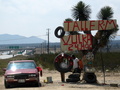
We drove across the USA / Mexico border at Nuevo Laredo in my brother Jim's car. He returned to the USA the next morning but before that, he dropped us off at the bus station, and before that, we drove around looking for a place to have coffee.
We all knew that crossing the border would take us to a different culture, but none of us expected it to be so hard to find coffee.
Jim had his car thoroughly searched heading back into the USA, with dogs, and after that, he paid $3.60 at an easy-to-find Starbucks on the other side.
Lili and I found coffee inside the bus station.
For the record, I only patronize Starbucks in a coffee emergency.
I prefer Mom-and-Pop coffee shops as they have more character,
and this helps the local economy when profits go to local store owners.
Which is good.
Did you know that the profits at Wal-Mart mostly go to the world's richest family?
I never shop at Wal-Mart. I vote for President once every four years, but I vote with my wallet every day.
Oh yeah, Mexico...
Arriving in Monterray exhausted, Lili and I went straight to a cheap hotel near the bus station.
The receptionist assumed we only wanted a room for one hour. Oops! "No, that will be for the whole night, por favor." Later, a clean metro carried us to a modern downtown where we dined on cheese enchiladas and chili rellenos.
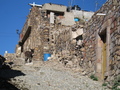
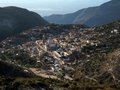
We stopped in a town called Real de Catorce. The place once had 40,000 inhabitants, but the silver vein that supported so many people stopped producing, so now it's just a sleepy mountain town, perfect for hiking and kicking back with a book.
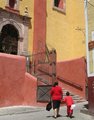
Guanajuato
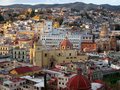
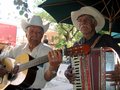
is a colorful university town whose plazas are filled with mariachi bands at night.
There are no traffic lights, but rather one-way streets and tunnels. There are no neon signs, either. It's a great city.
Indeed, it's a UNESCO World Heritage site.
And the weather is perfect. We've been looking forward to getting back on the road for a long time, and now that we sold the house in Colorado, game on!
We are happy to be in Mexico! We plan to make an overland journey all the way to South America...
April 2007 - Mexico City to Zipolite Beach
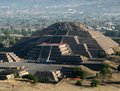
I was apprehensive about returning to Mexico City because I remember the pollution being so bad that the cityscape was a thick brown cloud of smog; I found it hard to breathe, and my eyes watered. Fortunately, we arrived with the wind, so we had no such troubles. Indeed, we enjoyed meeting nice people and seeing the sites, including the ancient pyramids at Teotihuacán and the outstanding murals painted by Diego Rivera inside the National Palace.
We moved on to Puebla to visit a friend of a friend, Luis, who took us to the hottest dance club, Mexico's largest pyramid (now a church) at Cholula, the remote ruins of Cacaxtla, and his mother's house for wonderful home cooking.
Oaxaca has (in my opinion) Mexico's nicest Zócalo (town square), and interesting indigenous culture. You should visit for the Day of the Dead festivities to celebrate the lives of those who lived before. I'll never forget drinking tequila in a crowded cemetery full of flowers, all night long (back in 1992).
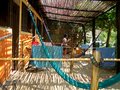
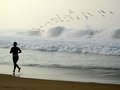
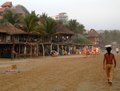
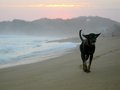
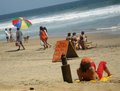
Ahhh... Zipolite. Being here brings back good memories. Much has changed, but thankfully, much has stayed the same. There are still no "tourist" hotels of the kind that prevail in Cancún. Instead there are bungalows and basic rooms. Unlike Mexico's gringo resorts (which we avoid), it is rare to hear English spoken. This is one of the few beaches that has managed to hang on to a laid-back European hippie culture. Indeed, the place has acquired a reputation as a nudist beach. The vast majority wear clothes or bikinis, but Lili still giggles every time someone strolls in front of us butt naked.
|
|
|
|
|
April 2007 - State of Chiapas
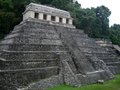
The archaeological site at Palenque is impressive.
When I first arrived by bicycle 15 years ago, I found one lonely camping area near the ruins (Mayabell).
Now there are many hotel options.
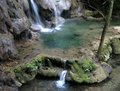
The roads have improved and the buses are more comfortable, but alas, now one has to pay to see what was once a secluded waterfall, and they don't even let you swim! There are A LOT more tourists.
I remember San Cristobal de las Casas as a small town; now it's a big city. So goes the planet.
I just read Collapse by Jared Diamond, author of the Pulitzer Prize winning, Guns, Germs, and Steel. I highly recommend both books. Collapse documents why the Maya and other civilizations disappeared, and to put it simply: if you cut down all your trees, your civilization is in big trouble. We are cutting down all of our trees. Watch The Story of Stuff. This can no longer be seen as alarmist, tree-hugging, environmentalist paranoia. If we don't make radical changes soon, our civilization is poised to go the way of the Maya, perhaps even in our lifetimes (or at least there will be unprecedented human suffering and continued extinctions). And if you think I'm just being alarmist, go to Ethiopia, Rwanda, or Haiti... The Garden of Eden is now a desert. What I'm saying is: support courageous and radically green politicians. Gracias.
Previous: USA . . . Next: Guatemala
World Tour Home Page