AUSTRALIA
 |
 |
 |
 |
 |
 |
 |
 |
 |
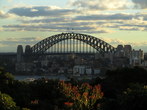 |
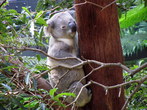
G'day mates! We flew to Sydney from Wellington on a spontaneous trip given a fantastic deal on airfare. We found Sydney to be a clean and modern city, with a scenic harbour and abundant leisure. So far, we have only seen "mainstream" Australia (including trips to Brisbane on business), and at times it would seem as if we are in the USA except for the left-side drivers and the funny accent :-) We would love to tour the outback some day. Meanwhile, we did the best we could; we went to the zoo and an indigenous film festival.
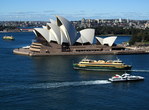
I grew up hearing about Australia's aborigines as pre-historic people who lived in the desert, and I wondered why they chose to live in the desert. Now I know. They used to live in the nice places, too. Indeed, it was only in 1972 that the government stopped stealing aboriginal children from their parents in an effort to assimilate them into white society. The stolen children lost their culture, language, spirituality, and self-esteem. As a measure of how much mainstream society cares, the FREE film festival at the iconic Sydney Opera House was not crowded. We saw zero young people. Sigh.
Australia is New Zealand's rich uncle. As soon as Lili and I become NZ citizens, we can live and work "aross the Tasman" if we so desire. Many kiwis do, as the economy is bigger and stronger, and that includes salaries. (The powerful Aussie dollar makes visiting as a tourist expensive, however.) The conventional wisdom is that the economic boom is mostly based on the mining sector, with massive and growing exports to India and China.
One of my friends is married to a Member of Parliament with the New Zealand Labour Party, and his insight is that all those NZ'rs who vote with their feet can't be wrong. "It is a myth," he says, "that Australia is more prosperous primarily to mineral extraction. The relatively better position is underpinned by fundamental policy decisions taken by Australian Labour governments in comparison to NZ National governments: 1) Australia has protected wages and working conditions, keeping unions in their role, whereas the National Government in NZ in 1990 brought in anti-union legislation that saw wages gutted over a six-year period. This has been essential for Australia to maintain such a strong middle class. 2) Australia has always encouraged the manufacturing sector, never prepared to surrender it to the Chinese. [This is also true of Brazil.] 3) Labour governments, through legislation, have prevented the banking system from becoming infected by speculative greed, as occurred in the USA and Europe. All the genius capitalists could do in NZ during the past 30 years is sell assets (state and private) to foreigners, and borrow cheap money off shore to invest in real estate, low-value commodity production, and low-return tourism, with the consequences of low returns built on low wages."
In summary, there is a lot to like about Australia. The government is relatively good and so is the culture. It's too bad that it's so expensive to visit.
 |
 |
 |
 |
 |
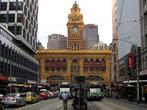
We never expected our first visit to Australia to be so removed from cowboys and crocodiles. We saw kangaroos only on the dollar coin, and zero aborigines. But we did see U2 (Lili's favourite band) in Melbourne with Brazilian friends, and we learned that Brazilians at a rock-and-roll show define modern Australia as much as koalas and sheep shearers. We also learned that Melbourne is a marvelous multi-cultural metropolis that consistently ranks as one of the world's top cities for livability.
From reading local newspapers it is clear that many white Australians believe that somehow they are not immigrants like everybody else, so therefore every child should celebrate Christmas in school. We think children should instead celebrate history and humanity. As world travellers, we observe good and bad people, smart and dumb people, everywhere. What varies are superficial aspects of form, but our brains work the same. What varies is culture, that which is passed down from generation to generation and broadcast over television. Religion and language are the quintessential elements of culture, and these create the barriers that divide us, not skin colour. There is far more that unites us... We think that forcing children to celebrate Christmas is divisive. Indeed, aside from promoting a mythical supernatural being for which there is no evidence, celebrating Christmas forces children into an unhealthy expectation that they should receive consumer stuff for free. Why like this? Anyway, this isn't a problem only for Australia.
 |
 |
 |
 |
 |
Previous: French Polynesia . . . Next: USA
More Australia (2014)